The Roadster
Sapper Wilfred Vernon Perrins Royal Engineers & Home Guard
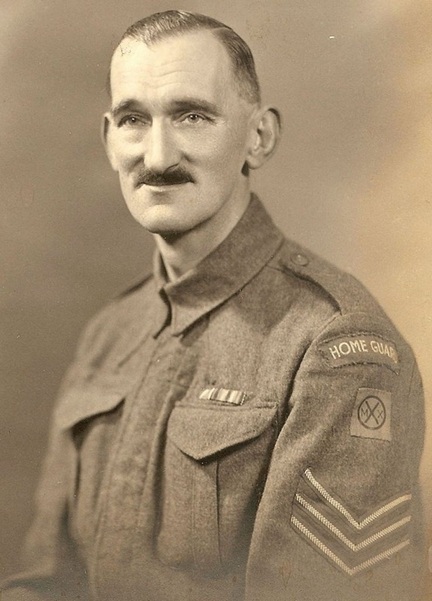
Wilfred Vernon Perrins
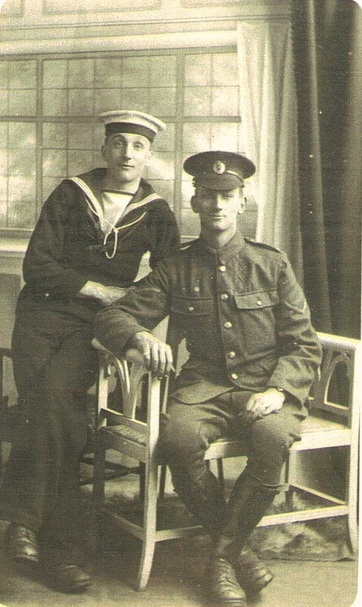
The Man Wilfred Vernon Perrins was born on 17th March 1894 in Paddington, London, son of Edward, a shirt collar wash employer and Alvina, and had had one brother, William who was born in 1898 and later joined the Royal Navy. By the time of the 1901 census, Wilfred and family were living at 357 Harrow Road, with their servant Alice Barton. On 20th October 1913 aged 19, Wilfred began work at Bentalls, a department store in Kingston-on-Thames as a Draper. Here he worked until 21st June 1915, when, aged 21 and responding to the call to arms following the outbreak of World War I a year earlier in August 1914, he left of his own accord enlisting in the Royal Engineers as a Telegraph & Wireless Operator. He was attested the next day 22nd June as a Sapper with service number 103793. On enlistment he was described as 5’.9” tall with blue eyes, brown hair, a chest of 34” with a range of expansion of 3½ “, a mole on his left flank and his religion as Church of England. His initial training was at Biggleswade Signal Depot and he re-mustered as a Telegraphist being promoted to Lance Corporal on 5th February 1916 and Corporal thereafter. Wilfred formally qualified on 11th April 1917 becoming a Signal Service Despatch Rider, having been a keen motorcyclist before the war. Wilfred was posted to the Western Front in France as part of the British Expeditionary Force on 5th February 1918, carrying out numerous missions and writing a short book called A Few Reminiscences of the Great War 1914-1919, by one who’s done his bit, detailing a number of his personal experiences and providing an interesting insight into a Despatch Riders life on, and near the front line; earning the sobriquet The Roadster.
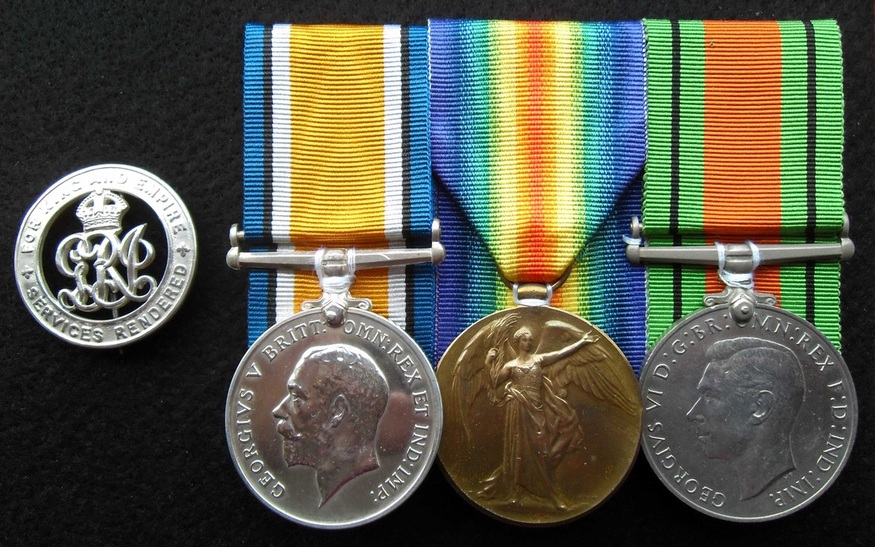
Silver War Badge. 1914-18 British War Medal. Victory Medal. Defence Medal.
On 5th June 1918 his army service came to an abrupt end when he received a shrapnel wound from a shell to his right shoulder in the Village of Blangy Tronville, near Amiens whilst on motorcycle duty as a DR; rescued by Australian soldiers they took him to the nearest dressing station for initial treatment. He was then transferred to a number of other stations, eventually being admitted to No 12 (St James) General Hospital and St Louis American Hospital in Rouen for surgery. Due to the injury Wilfred was discharged on 19th June as no longer physically fit for War Service under King’s Regulations, Para 392 XVI, and in his own words “Thus ended the military career of one Despatch Rider”. Returning to England the next day via Red Cross train to Le Havre and then the Union Castle Liner Guildford Castle, a luxury passenger liner converted to a hospital ship. In England he was admitted to the Beatrice Ward, Royal Hants County Hospital, undergoing a further successful operation on 11th September.
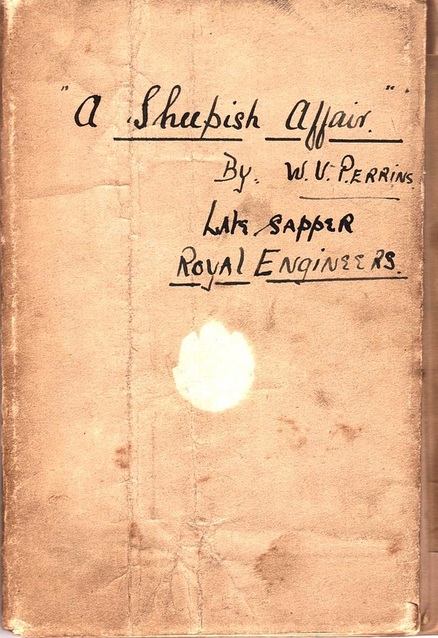
The Story The Medals awarded to Wilfred Perrins were acquired through E-Bay in July 2007. They were of interest due to their simplicity, a WWI pair, but coupled with a large archive of additional personal material, including photographs, certificates and driving licences. It took seven years for the entire story to be researched and written, and as always Ancestry.com proved extremely useful. As Wilfred had been pensioned during World War I some of his records still exist thus allowing at least a partial biography to be built up. Of particular interest are the two books he wrote, especially A Few Reminiscences of the Great War 1914-19. Whilst these do not give a great amount of biographical information, they provide a sharp insight into the life, conditions and mind set of Wilfred during his time at the front during WWI, and specific detail on how he came to be injured by shrapnel. It is satisfying to know that Wilfred wrote his books for ‘others’ to read, and it is unlikely he could ever have imagined that they would be published on the internet 100 years after the outbreak of The Great War for the world to see if they wish?
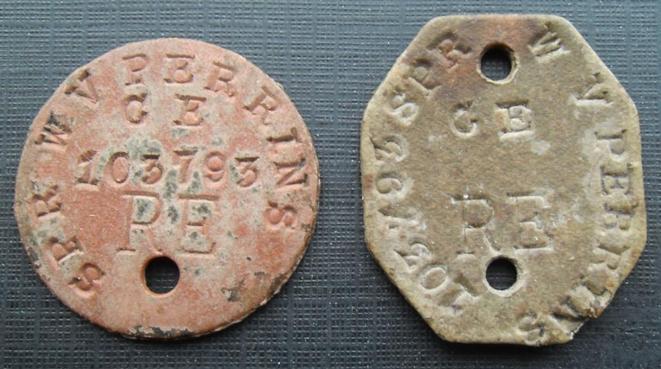
Wilfred's World War I Dog Tags
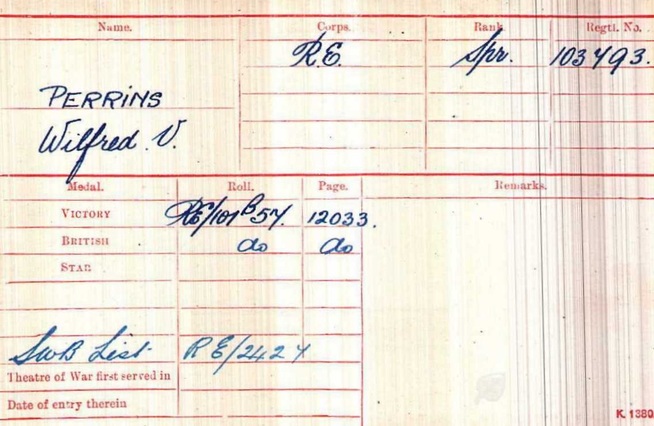
Wilfred Perrins' World War I Medal Index Card
Confirming award of 1914-18 British War, Victory Medals & Silver War Badge |
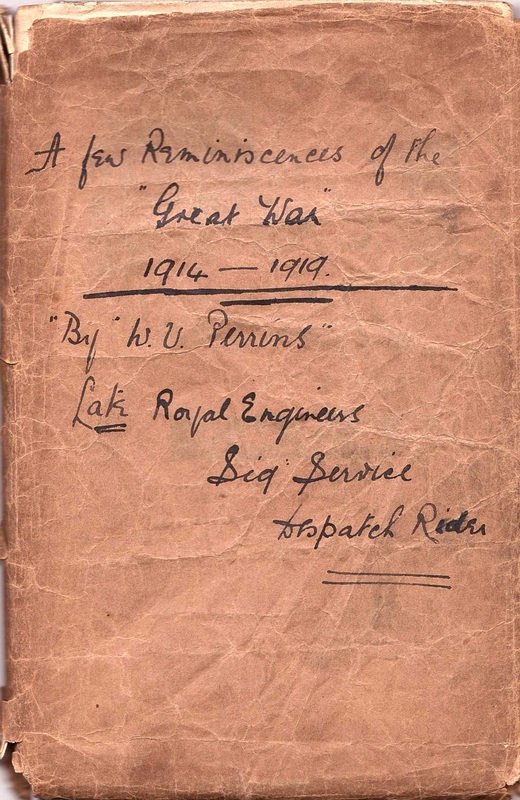
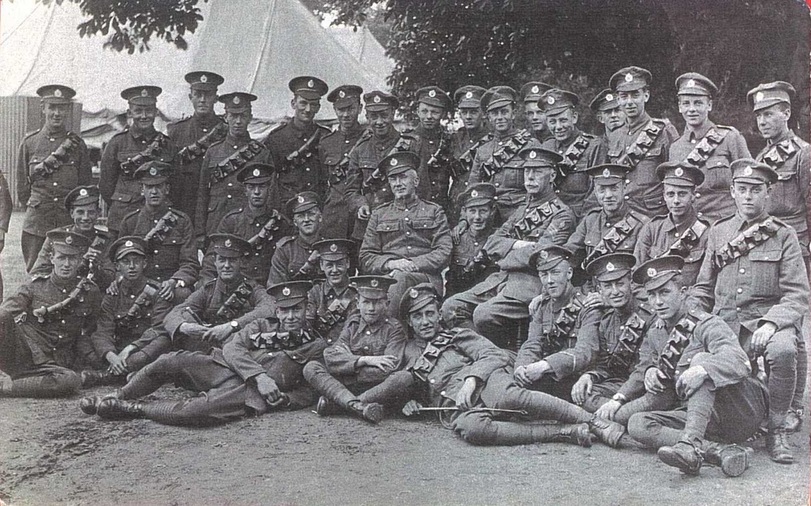
Wilfred Perrins rear row 5th from left
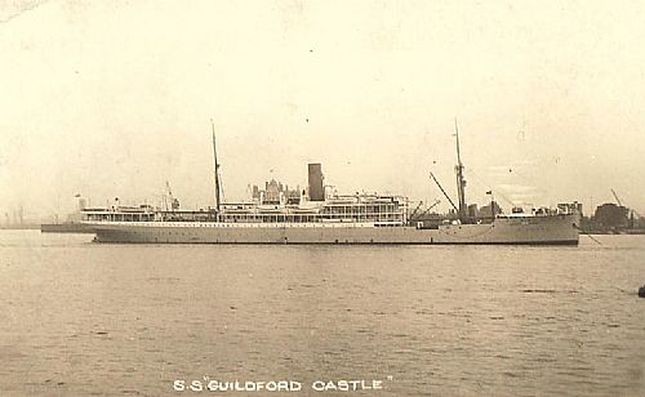
His Majesty’s Hospital Ship Guildford Castle 1911 7.995 gross tons, length 451ft x beam 54.3ft, one funnel, two masts, twin screw, speed 13 knots, accommodation for 87-1st, 130-2nd and 195-3rd class passengers. Built by Barclay, Curle & Co, Glasgow for the Union-Castle Mail SS Co's intermediate service from London to South Africa, she was delivered in Oct.1911. At the outbreak of war in 1914 she was initially used to carry troops to Europe and the commissioned as a hospital ship with 427 beds. She served in the German West & East African campaigns, but was more occupied with disease than war wounds. On 10th Mar.1918, inbound to Avonmouth she was hit by a torpedo which failed to explode and was decommissioned and returned to Union-Castle Line in Nov.1918. Initially used in 1920 on the intermediate route, she then transferred to the "round Africa" service. On 31st May 1933 she collided with the Blue Funnel Line ship STENTOR in the River Elbe with the loss of two lives (pilot error was held to blame). Beached on 1st June and became a total loss. [Merchant Fleets, vol.18 by Duncan Haws].
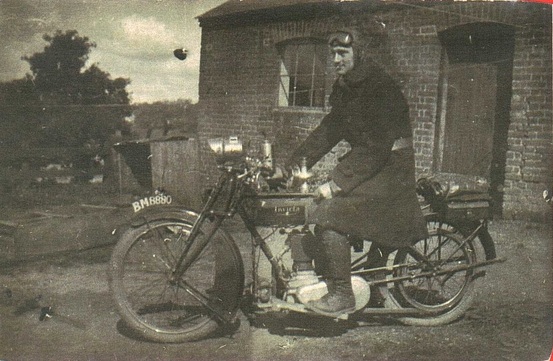
"Billy" Just starting for his first club run May 9th 1920
MEDAL DETAILS
- 1914-18 British War Medal: 103793 SPR. W.V.PERRINS .R.E.
- Victory Medal: 103793 SPR. W.V.PERRINS. R.E.
- Defence Medal: Unnamed as issued
- Silver War Badge: B456513 (incorrect - actual No should be 16251)
Page last updated 2 Apr 14
